.svg)

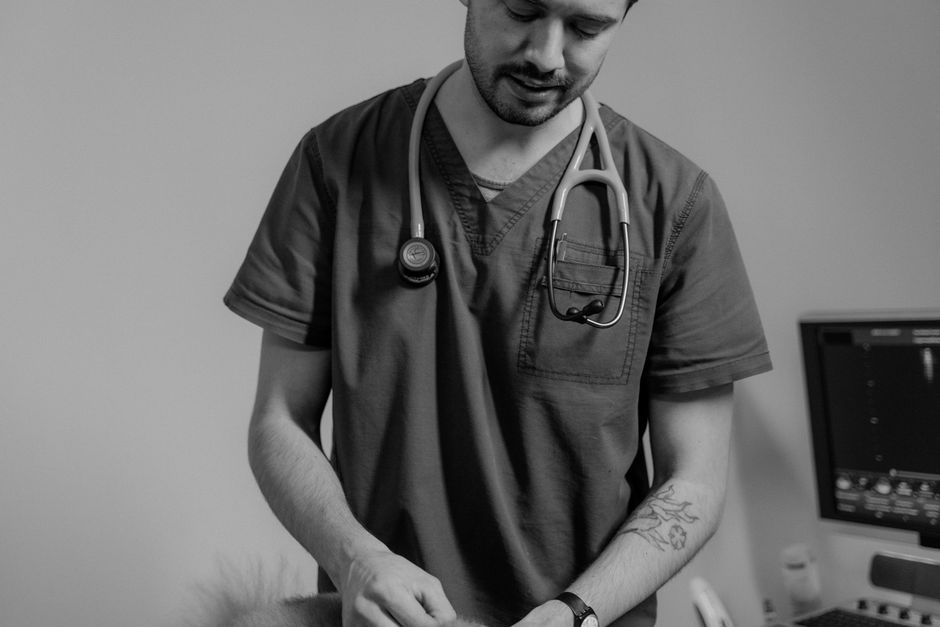
Caring for a loved one with a wound infection in the hospital mostly means showing up, asking clear questions, and choosing your words with care, not making medical decisions. The care team manages the wound and the antibiotic plan. Your job is to understand what's happening, learn the follow-up routine before your loved one leaves, and avoid language that adds shame on top of an already hard situation.
If your loved one was admitted in Henderson for an infected injection wound, an abscess, or a venous ulcer that needs intravenous (IV) antibiotics, this guide walks through what to ask, how to support daily wound care, and what not to say. None of it replaces a conversation with the treating physician or nurse. It's meant to help you walk into those conversations with better questions and a calmer head.
What kind of wound needs this level of hospital care?
Not every wound needs a hospital stay, but some infections spread fast or sit deep enough that oral antibiotics and home care aren't enough. When that happens, a licensed acute inpatient hospital, meaning a facility with 24-hour nursing and physician coverage, becomes the safest place to treat it.
Wounds connected to injecting drugs are a common reason for this kind of admission. Repeated injection can cause abscesses (pockets of infection under the skin), cellulitis (a spreading skin infection that causes redness, warmth, and swelling), or deeper tissue damage. In parts of Nevada, the drug supply has also included xylazine, an animal sedative that the Nevada Division of Public and Behavioral Health has flagged as a cause of severe, slow-healing wounds when mixed with fentanyl. Venous stasis ulcers, which develop when poor circulation in the legs keeps skin from healing properly, are another common reason someone ends up needing IV antibiotics in a hospital bed instead of a clinic chair.
Left untreated, any of these can progress into something more serious: a bloodstream infection called sepsis, a heart valve infection called endocarditis, or a bone infection called osteomyelitis. Those conditions often require weeks of IV antibiotics, which is one reason your loved one may be admitted longer than you'd expect for "just a wound." This is exactly the kind of medical need that wound care at LVRH is built to handle.
What questions should you ask the care team about the wound and antibiotics?
Ask what the wound is, how deep it goes, and how the team plans to treat it before you ask anything else. A short, specific list of questions gets you further than general worry, and most nurses and physicians welcome a family member who's trying to understand rather than just react.
That last question matters more than it sounds. A case manager or social worker is usually the person lining up home health visits, outpatient wound clinic appointments, and any medication needed after discharge. Getting their name and number early saves you from scrambling later.
How can you support daily dressing changes and follow-up care?
Your most useful role after discharge is logistics, not medical judgment. That means keeping supplies stocked, tracking appointments, and knowing what a normal healing wound looks like compared to one that's going backward.
Before discharge, ask the nurse to show you, not just tell you, how the dressing change is done, if your loved one wants you involved. Write down or photograph the steps if that helps you remember. Ask specifically what a normal amount of drainage looks like versus drainage that should trigger a call to the wound clinic or primary care provider, since redness, swelling, fever, or a foul smell can all signal the infection is returning.
Keep a simple list on the fridge or in your phone: follow-up appointment dates, the wound clinic's phone number, and the name of any oral antibiotic your loved one is sent home on. Missed follow-up appointments are one of the most common reasons a treated wound turns into a repeat hospital visit, so treating those appointments as non-negotiable is one of the most protective things you can do.
What words should you avoid, and what helps instead?
Avoid any language that turns the wound into a moral judgment, and use plain, medical language instead. Words like "dirty," "your fault," or "if you'd just stop" don't change behavior. They just add shame to a person who's already scared, in pain, and possibly facing the hardest week of their year.
Try describing the wound the way the clinical team does: an infection, an abscess, cellulitis. Ask "how are you feeling today" instead of commenting on how the wound looks. If substance use comes up, "person who uses drugs" is more accurate and less loaded than labels like "addict," and it leaves room for your loved one to talk to you honestly instead of shutting down.
Shame is one of the most common reasons patients leave a hospital against medical advice (AMA), meaning they choose to leave before the treatment team recommends discharge, often before an antibiotic course is finished. A wound that isn't fully treated can come back worse. Keeping the conversation focused on the medical facts, not on blame, gives your loved one a better reason to stay through the full course of treatment.
Why might your loved one want to leave before treatment is finished?
Fear of untreated withdrawal, unfamiliar surroundings, and shame are the three most common reasons patients want to leave early. All three are addressable, and none of them mean your loved one doesn't want to get better.
A hospital that treats substance-related medical conditions in a stigma-free setting, with staff trained to talk about wounds and drug use without judgment, tends to see patients stay longer and complete treatment more often. LVRH pairs the medical wound and antibiotic care with certified peer recovery specialists, people with their own lived experience of recovery, who can sit with your loved one and talk in a way a family member or physician sometimes can't. Case management also starts working from day one on what comes next, whether that's a wound clinic follow-up, outpatient addiction treatment, or medically managed detox for withdrawal that needs its own attention.
If your loved one is also going through opioid, alcohol, or benzodiazepine withdrawal alongside the wound infection, know that some withdrawal, especially from alcohol or benzodiazepines, can become medically dangerous and needs its own supervised plan. That's a separate conversation worth having directly with the physician, and it's part of why hospital-level care, rather than an outpatient clinic, may be the right setting for a while.
Frequently asked questions
How do I know if my loved one's wound needs a hospital instead of a clinic?
Signs like spreading redness, fever, red streaking, foul odor, or a wound that hasn't improved with oral antibiotics usually mean it needs more than outpatient care. A physician or emergency department can determine whether IV antibiotics and closer monitoring are needed, which is often the point where a hospital like LVRH becomes part of the plan.
What is a PICC line and will my loved one go home with one?
A PICC line is a thin, flexible tube placed in a vein in the arm that allows IV antibiotics to be given without repeated needle sticks. Some patients go home with one to continue antibiotics through a home health nurse, while others complete the full course in the hospital. The care team will explain which plan applies before discharge.
What should I say if I'm angry or scared about how the wound happened?
It's normal to feel that way, but it helps to keep those feelings out of conversations with your loved one during treatment. Focus your words on the medical facts and next steps, and consider talking through your own feelings with a counselor, a support group, or the hospital's social worker instead.
Can family be involved in wound care during the hospital stay?
Yes, if your loved one wants that involvement, and many patients do. Ask the nursing staff whether you can be present for a dressing change so you can learn the technique and ask questions directly, especially if you'll be helping with care after discharge.
Is LVRH an emergency room or a rehab facility?
Neither. LVRH is a licensed acute inpatient hospital that treats the medical complications of substance use, including infections, IV antibiotic therapy, and detox, in the space between an emergency department visit and longer-term addiction treatment. You can review the full services overview or read frequently asked questions for more detail.
What if my loved one wants to leave before the antibiotics are done?
Talk with the nursing staff or a peer recovery specialist right away, since early departure often comes from fear or shame that can be addressed. Ask what would need to happen for your loved one to feel safe staying, and loop in case management to talk through what happens next either way.
This content is for educational purposes only and is not a substitute for professional medical advice. If you or someone you know is in crisis, call 988 or your local emergency number.
To talk with our admissions team, start the admissions process here or call (702) 941-4673. If you or someone you know is in crisis, call or text 988 anytime.